神探伽利略
More global travelers are going beyond China’s megacities to experience farming, village life and local traditions firsthand_我的网站

A |
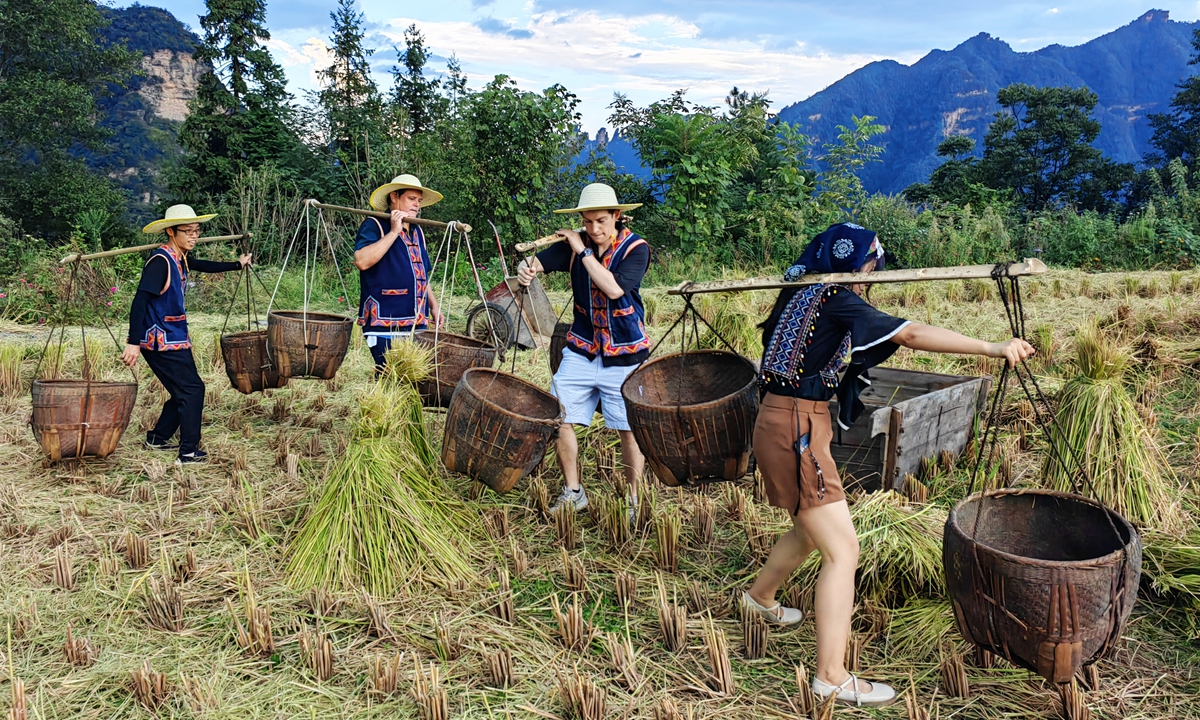
US tourists experience the farming culture of harvesting crops at an agritourism farm in Zhangjiajie, Central China's Hunan Province. Photo: VCG
Editor's Note:In early 2026, the phrase "Very Chinese Time" went viral on global social media platforms. Content centered around China's everyday life has been widely viewed and discussed, bringing the Chinese experience into the international public sphere in an extremely down-to-earth way. However, this phenomenon goes beyond mere online popularity - it is unfolding amid the ongoing reshaping of the global order and the accumulation of anxiety in Western societies. A deeper transformation is emerging, as China's lifestyle, pop culture and technological practices are increasingly recognized, discussed and used as references around the world.
This series uses "Very Chinese Time" as an observation lens to go beyond a single internet trend and systematically showcase how the Chinese experience is entering global everyday life. This is the sixth installment of the series."This is way harder than any weights I lifted in the gym. I never felt so much pain and struggle as when I was carrying those watermelons," Kevin Loi-Heng could not help thinking as he learned to carry two baskets of watermelons on a shoulder pole, just as local farmers do.
The 29-year-old traveler from London had seen China's modern megacities on previous business trips. But two weeks spent working on farms in the countryside of Fenghua, Ningbo, East China's Zhejiang Province, gave him a chance to see a very different side of the country.
China's inbound tourism boom has continued into 2026. Inbound tourism maintained strong growth, while data from the National Immigration Administration showed that 22.91 million foreigners entered China in the first half of the year, up 20.4 percent year-on-year, according to a report about 2026 tourism market insights for the first half of the year released by the China Tourism Association.
As "China Travel" continues to trend across social media, a trip to Beijing, Shanghai, Guangzhou or Shenzhen is no longer the only way foreign visitors explore the country. Increasingly, they are heading into villages, farms and fields.
Videos posted by foreign travelers show visitors picking fruit, harvesting rice, feeding livestock, learning traditional farming techniques and simply spending time with local villagers.
Through these immersive rural experiences, they are discovering a different China, one that is earthy, vibrant and deeply human, a tourism expert told the Global Times.
See a different sideKevin's own company focuses on research into sustainable agriculture and soil health, so working with the land was not entirely unfamiliar territory. Yet he found that China's countryside taught him a great deal.
"One question I had before coming to China to do farm work was: With 1.4 billion people, how does China feed all of its people?" Kevin told the Global Times. "I had this picture in my head that China was very large, and that remote rural communities would have different ways of living and different land practices. I wasn't sure if they would accept a foreigner like me."
The fact is, this land welcomed everything.
To get to the mountain fields and start working, Kevin and his fellow participants would get up as early as 4 am and begin working by 6 am. They picked local white peaches, harvested watermelons and dug up peanuts.
Beyond picking crops, Kevin helped prepare the land and soil, plant seasonal crops such as chilies, prune overgrown trees and clean up farmland. He also fed pigs, chickens, ducks and geese, checked agricultural equipment at the local rural market and spoke with farmers and agricultural workers about the challenges they face in their daily lives.
"One of the first tools I used was a backpack sprayer. It was actually very practical," he recalled.
Kevin said the experience broadened his understanding of China. "I saw that the working people are very humble, but also very hardworking."
Over the past year, China's countryside has emerged as a new growth area for inbound tourism.
According to data released by Trip.com, a large online travel agency, on February 11, its affiliated rural resort farms saw inbound tourism bookings increase by more than 50 percent year-on-year in 2025, while the number of room nights booked by international visitors rose by more than 75 percent. "Visiting the Chinese countryside" is becoming a new option for international travelers who once focused overwhelmingly on major cities. Singapore, the US, Australia, Germany and Malaysia were among the major source markets.
Many overseas vloggers are turning their lenses toward China's countryside, hoping to find a different perspective from which to observe the country.
In March, US content creators Ludwig and Michael were cycling through a village in Central China's Hunan Province, when they encountered villagers preparing for a traditional funeral. Mistaking the gathering for a busy restaurant and the people dressed in white mourning clothes for cooks, they initially misunderstood what was happening. But rather than being offended, a local villager surnamed Li invited the two travelers into his home for a meal. The three chatted about their cycling adventures along the way and eventually sang a song together before parting ways.
After Ludwig uploaded the footage to YouTube, the video received more than 2 million views, offering overseas audiences an unexpected glimpse into culture in a Chinese village.
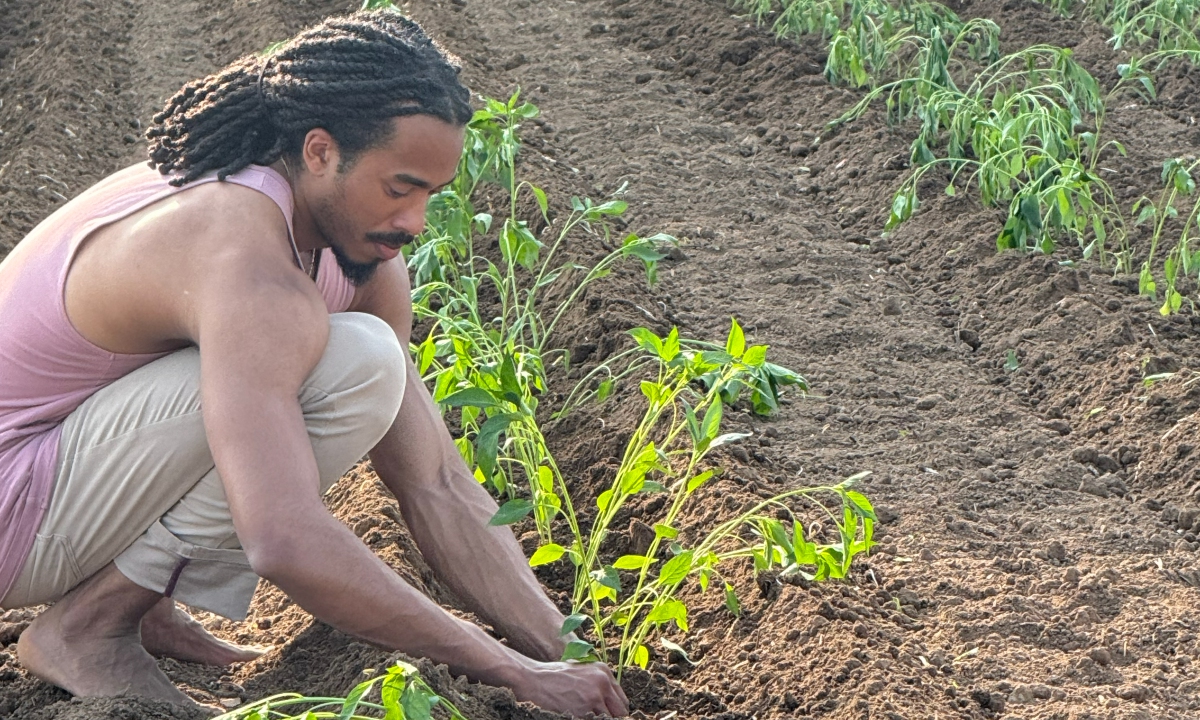
Kevin Loi-Heng, a 29-year-old traveler from London, works on a farm in Qufu, East China's Shandong Province, on April 18, 2026. Photo: Courtesy of Kevin Loi-Heng
The appeal of countrysideAs overseas audiences increasingly encounter images of China's highly modernized cities across various online platforms, some travelers are showing greater interest in experiences that offer a sense of authenticity, simplicity and contrast, Zhang Lingyun, a professor and the executive editor-in-chief of Tourism Tribune journal, told the Global Times.
After Kevin showed the video on social media, a lot of his friends found it quite unexpected. "They found it interesting and funny. One of my friends remarked, 'You're always doing side quests,' and said he wished he could live an adventurous life like me," Kevin recalled.
The criteria by which travelers evaluate an experience have changed, Zhang emphasized.
Zhao Mai, an English-speaking tour guide who works extensively with international visitors, has observed this shift firsthand.
Zhao told the Global Times that many young foreign travelers are increasingly interested in participating in everyday activities and interacting directly with local people rather than moving from one landmark to another.
There is another attraction: value for money. China's rural tourism destinations can offer international visitors a combination of affordability, quality and variety that is difficult to match, Zhao said. The diversity of China's countryside is also a major advantage.
In 2025, among the hundreds of "best tourism villages" selected by UN Tourism, China alone accounted for 19, spanning a vast geographical range from the eastern coastal regions to the western plateaus, and from the water towns of Jiangnan to the mountain villages of the southwest, according to the CCTV News.
But Zhao believed the most important factor is still the rise of experiential tourism itself.
"Experiential tourism has become one of the key forces driving the global tourism industry," he said. "And that is where China's countryside has a natural advantage. Rural areas in China offer natural scenery, local traditions, community life and opportunities for deeper participation."
Kevin said working in the village in Zhejiang gave him a new perspective on self-sufficiency and sustainable living.
The experience was so meaningful that he returned to China for a second trip, this time spending another two weeks doing agricultural work in Qufu, East China's Shandong Province.
A teacher living in the local Confucius Institute community spoke to him about the "qi" of the soil, an idea that, Kevin noted, is largely unfamiliar in the Western context.
"In the West, I was accustomed to explanations and theories in which soil is seen simply as a resource with physical and chemical properties that can be exploited," he said.
The trip helped him understand soil in a broader way, not merely as an agricultural resource, but as something essential to community life and health and as a connector between humans and the environment, or biosphere.
"I wish I could speak Chinese and understand local people's thoughts better, so I could learn more about Chinese rural agricultural life and local history," he said.
In May 2026, a village in Guilin, South China's Guangxi Zhuang Autonomous Region, held its annual Terraced Fields Plowing Festival. Across the layers of terraced fields, local residents demonstrated traditional farming practices, attracting visitors from both China and abroad, the news outlet chinanews.com reported.
He Chengxi, a deputy manager of the media department of Guilin Longji Tourism Co., Ltd., told the Global Times that foreign visitors are particularly drawn to this immersive experience as they are intrigued by this traditional method of farming, and found Chinese farming culture novel and meaningful.
And social media shows that the phenomenon goes beyond short-term tourism. For example, some foreigners who have married Chinese partners have shared their enjoyment of rural life online.
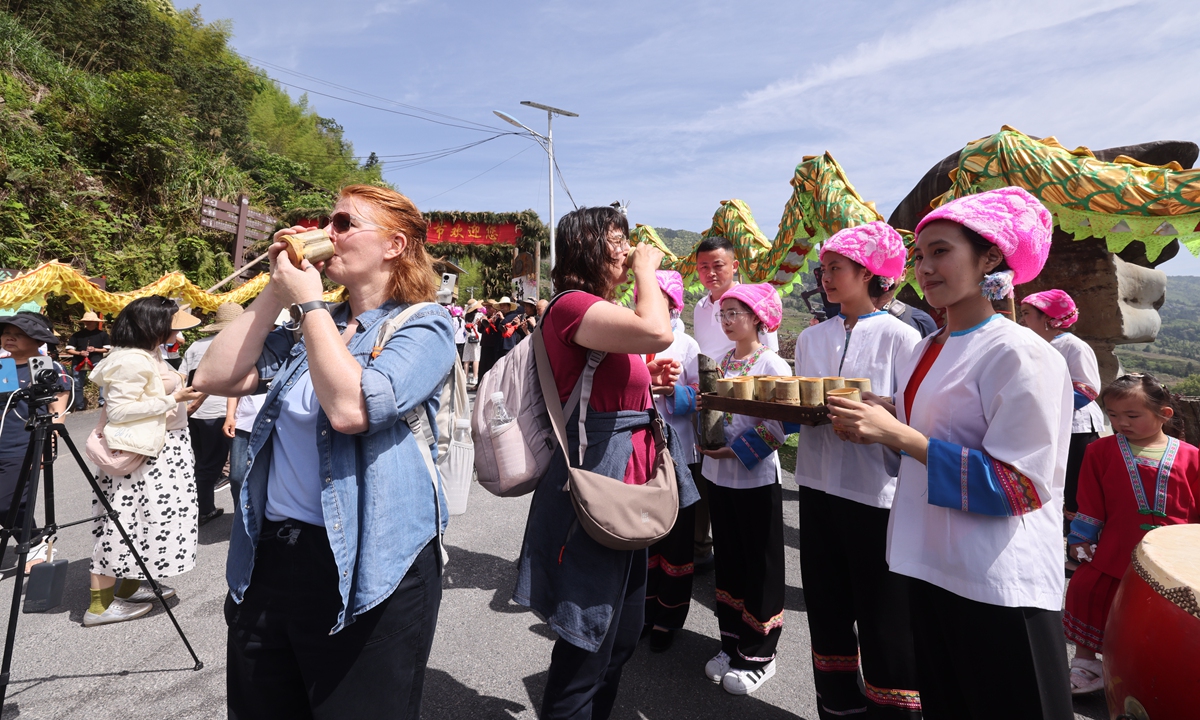
Foreign visitors taste local drinks during the Terraced Fields Plowing Festival held in Guilin, South China's Guangxi Zhuang Autonomous Region. Photo: Courtesy of He Chengxi
From tourism traffic to lasting connectionsZhao believes the growing interest in rural tourism should be viewed against the broader backdrop of China's efforts to revitalize the countryside and integrate agriculture, culture and tourism.
China unveiled its "No. 1 central document" for 2026 on February 3, outlining plans to advance agricultural and rural modernization and to promote all-around rural revitalization, according to the Xinhua News Agency.
According to estimates from the data center of the Ministry of Culture and Tourism, China received 793 million rural tourism visits in the first quarter of 2026, up 12.2 percent year-on-year. Rural tourism revenue reached 457 billion yuan ($63.5 billion), up 10.9 percent, Xinhua reported.
The direct economic impact of foreign visitors to rural areas, however, is harder to measure. Zhang said it seems that that rural inbound tourism remains a relatively small trend amplified by social media rather than an established industry at scale.
Zhao believes their most important contribution may therefore be something less immediately measurable: international visibility.
There is also a less visible effect. The arrival of foreign tourists can prompt local residents to reconsider the value of their own everyday lives, Zhao noted.
"Farmers who are accustomed to regarding planting, harvesting and tending livestock as routine work may suddenly find outsiders treating those same activities as something worth traveling thousands of kilometers to experience," he said.
That outside perspective can give ordinary agricultural work, local food and traditional customs a new sense of value, not only as tourism products, but as elements of local identity, Zhang said.
How can this social media traffic be turned into lasting tourism demand? Zhang believed that the key might not be intervening too heavily in the specific products that villages offer, but improving the basic conditions that allow international visitors to access them.
The government's role, the expert suggested, is to help bridge the "last mile," making rural destinations easier and safer to reach and navigate, while leaving room for villages and travelers themselves to determine what kind of experiences are meaningful.
And beyond economics, Zhang said, these encounters carry cultural exchange value.
"People-to-people exchanges can help dispel misunderstandings and allow the world to see another side of China: ordinary Chinese people, like people everywhere, value peace, stability and a prosperous life. That deeper cultural encounter may ultimately be one of the most valuable things international tourism can offer," he explained.
Kevin has not stopped thinking about the people and places he encountered in China's countryside. The experience changed his impression of rural China and made him want to return and stay longer.
"I would like to know more about what other people who have experienced these agricultural activities think," he said. "Is now the time to reconnect with this ancient practice?"
。
Editor's Note:
In an era of profound global shifts and increasingly complex regional dynamics, a proper understanding of the world must be rooted in "grounded experience" and localized insights. Global Times English edition, in collaboration with the Academy of International and Regional Communication Studies, Communication University of China, is proud to launch "Local Insights," an English-language column dedicated to original, field-based observations.
We invite Chinese scholars and professionals who are studying, conducting exchanges, or working outside China, as well as international students and friends living and studying in China who are familiar with the social contexts of their home countries or third countries, to begin from first-hand field experience and engage with social, cultural, and contemporary issues beyond China. The fourth article in this column, through the author's on-site experience, unpacks Singapore's distinctive national identity via its deliberate independence, structured multicultural integration policies and forward-looking urban and digital development plans.For many years, Singapore has been a favored destination for tourists and a highly sought-after place for education and employment. But when we talk about Singapore, what exactly do we mean? Is it the cityscape dominated by the Merlion and Marina Bay Sands? Is it a global standard for effective governance and economic success? Or is it a nation with a Chinese majority that is nonetheless founded on the principles of multiracial, multireligious, and multicultural nation-building?
In late May, as part of a media delegation from China invited by Singapore's Ministry of Digital Development and Information (MDDI), I had the opportunity to explore the country in depth. Following a narrative journey through the past, the present, and the future, I discovered a Singapore far more complex than its well-known global image suggests.
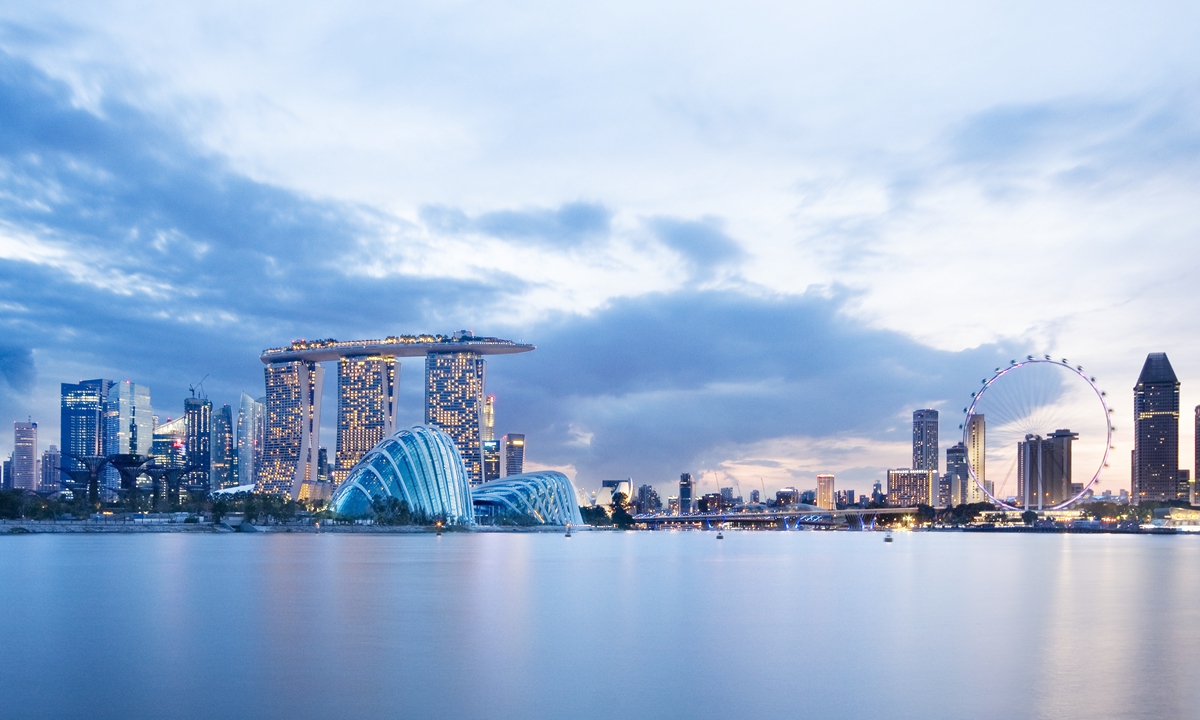 The view of Singapore Photo: VCG
The birth of a nation: A deliberate choiceTo truly understand Singapore, one must first understand its origins. For a long time, the prevailing story portrayed Singapore's independence on August 9, 1965 as a sudden break - Lee Kuan Yew's emotional announcement of separation from Malaysia, often seen as a forced expulsion. However, materials displayed at the National Library Board and MDDI's The Albatross File exhibition provide a more intricate picture.
The exhibition, which makes confidential documents from founding leaders like Goh Keng Swee and oral histories from Lee Kuan Yew and Kwa Geok Choo available, reveals a strategic, negotiated process behind the separation. These documents suggest that both parties - Singapore and Malaysia - increasingly recognized that given the circumstances, long-term stability was unattainable. Independence then emerged as a deliberate political choice, the result of calculated negotiations and a growing belief that a new nation based on equality beyond ethnicity was the only viable path forward.
The significance of The Albatross File lies not only in the historical details it unveils but in the shift in narrative from "forced survival" to "chosen destiny." The exhibition itself is equally revealing. Historical documents, immersive installations, AI-enabled experiences, and digital interfaces allow visitors not just to observe history, but to question and participate in its interpretation.
Leaving the exhibition, I gained more than just a deeper understanding of Singapore's founding; I became aware of how Singapore actively constructs its own historical narrative. In this young nation, history is about both the past and the shaping of future generations' understanding of what "Singapore" means.
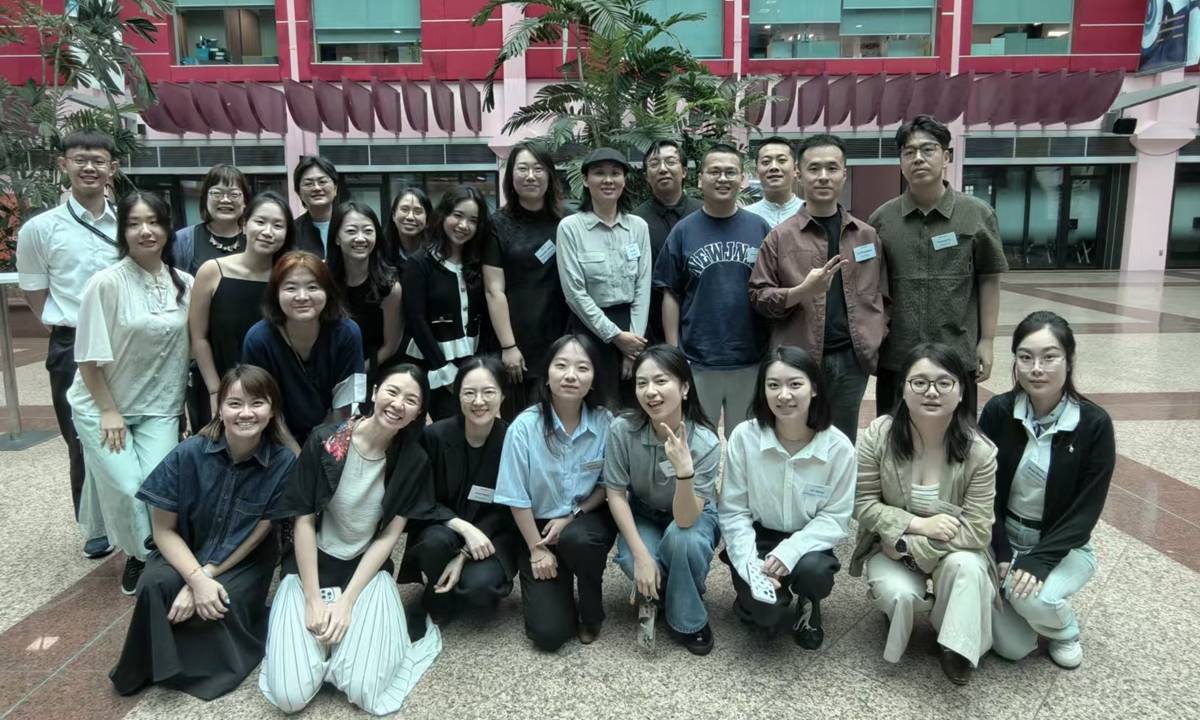 China media delegation and officials from Singapore's Ministry of Digital Development and Information pose for a photo in Singapore. Photo: Courtesy of Wang XiaofangCreating 'Singaporeans' in a multicultural society
While the archive tells the story of Singapore's birth, the city itself shows how a society of diverse ethnicities, languages, religions, and immigrant backgrounds has been transformed into a shared national identity.
Walking through Telok Ayer, Little India, and Kampong Glam, one experiences the reality of a society molded by Chinese, Malay, Indian, and global migrant communities. Temples, mosques, and churches stand close to each other. Thian Hock Keng, Al-Abrar Mosque, Nagore Dargah, and Christian churches coexist as part of a long-standing arrangement of pluralism.
This is not passive coexistence but a carefully cultivated social order shaped by decades of governance and policy design.
In 1991, Singapore's Parliament issued the Shared Values White Paper, outlining five core principles: Nation before community and society above self; Family as the basic unit of society; Regard and community support for the individual; Consensus instead of contention; Racial and religious harmony. In a young nation without a single dominant ethnicity, religion, or shared historical tradition, this value system serves as an ideological anchor that transcends differences.
At the Harmony in Diversity Gallery, key concepts like "mutual respect," "mutual understanding," and "finding common ground" are consistently highlighted. From "Many Faiths, One People" to "We, the Citizens of Singapore," the narrative repeatedly circles back to a central idea: Differences may persist, but a shared community must be maintained.
This idea of collective identity takes on another dimension at the SingapoREN exhibition at the Singapore Chinese Cultural Centre. Rather than focusing solely on preserving Chinese cultural heritage, the exhibition follows the transformation of migrants from temporary residents to citizens - from those who once saw themselves as transient to those who now fully identify as Singaporeans. It's not just a story of cultural preservation but one of identity transformation.
Perhaps the most tangible mechanism sustaining this multicultural cohesion is Singapore's public housing system, planned and developed by the Housing & Development Board (HDB). The apartments built by HDB are home to close to 80 percent of Singapore's resident population, of whom about 90 percent own their home. To promote racial integration and harmony, HDB introduced the Ethnic Integration Policy in 1989, which sets limits on the proportion of households from each ethnic group in housing blocks and neighborhoods to ensure a balanced mix of various ethnic communities in HDB towns.
Across HDB towns, public housing projects continue to evolve in response to demographic shifts and the rising aspirations of residents.
For example, Harmony Village @ Bukit Batok is an assisted living resident community jointly developed by HDB, Singapore's Ministry of National Development and Ministry of Health to expand the continuum of public housing options for seniors. Known as community care apartments, Harmony Village @ Bukit Batok is Singapore's first public housing development that integrates senior-friendly housing with care services that can be scaled according to care needs, as well as social activities to support seniors to live independently within the community.
Meanwhile, Punggol Point Cove is a public housing project situated along the shoreline of Singapore's north-eastern coastline. This waterfront development features wave-like architecture inspired by its location and the town of Punggol's heritage as a fishing village. Residents enjoy panoramic sea views and easy access to Punggol Promenade. It is also located near the Punggol Digital District, Singapore's first smart business district, where residents can benefit from job opportunities and new amenities near their home. Hawker centers further embody multiculturalism in everyday life. Dietary restrictions shaped by religion are managed through regulated food environments, allowing people of different ethnicities and income levels to share the same dining spaces. Whether it's Hainanese chicken rice, Indian roti prata, Malay nasi lemak, or Teochew fish ball noodles, cultural diversity is transformed from an abstract concept into daily practice.
Through shared space, shared consumption, and shared routines, Singaporeans, despite their varied ancestries, languages, and beliefs, become woven into a single social fabric. It is within this daily negotiation of differences that a true sense of national community emerges.
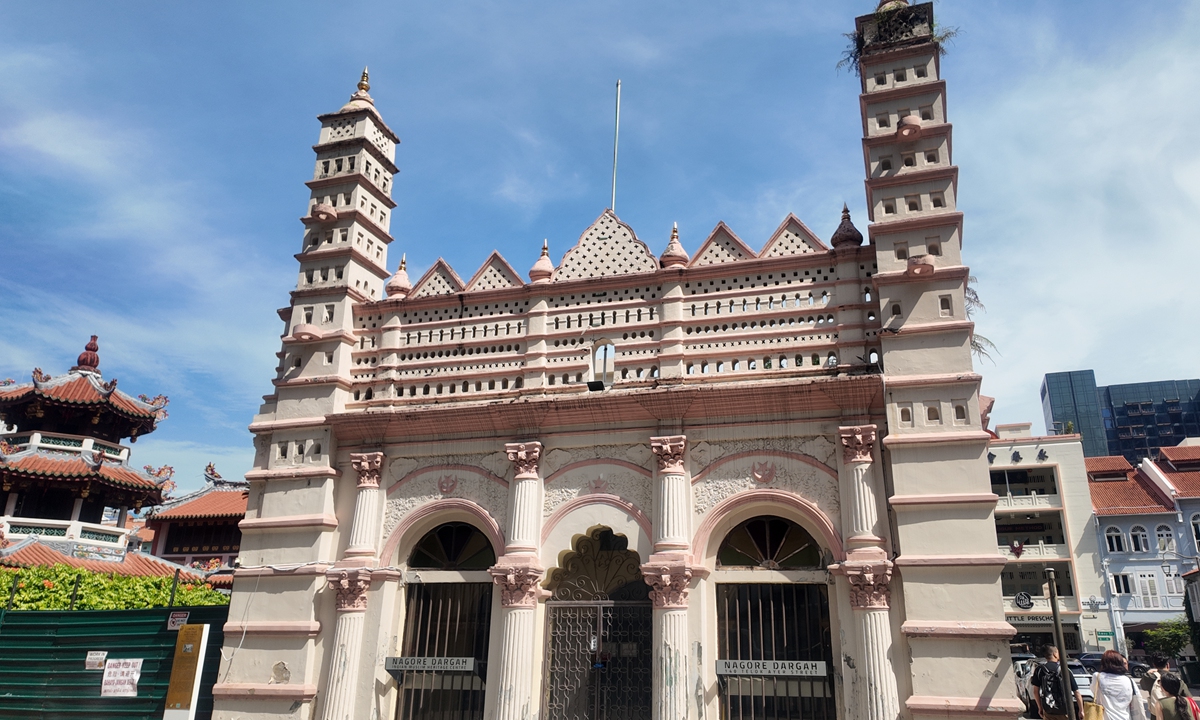 Nagore Dargah, a historic Indian Muslim shrine, on Telok Ayer Street, Singapore Photo: Courtesy of Wang Xiaofang
The future is already here: from planning to executionAt Gardens by the Bay, many visitors see a picturesque landmark. For Singapore, however, it is a model for future urbanism. Built on reclaimed land, the Gardens showcase how ecological design and engineering innovation can create a functioning ecosystem within an urban environment to support diverse flora and fauna. It reflects a belief that even within environmental constraints, human design can create new ecological possibilities.
If Gardens by the Bay represents the future of human-nature relationships, the Punggol Digital District embodies Singapore's vision for the future economy and society. As the country's first integrated smart district, it brings together industries of cybersecurity, artificial intelligence, and robotics within a unified urban space. The Singapore Institute of Technology is directly embedded within the district, ensuring that research outcomes translate into real-world urban solutions rather than remaining confined to academic publication.
The district's Open Digital Platform (ODP) aggregates data from more than 20,000 sensors in the district and connects various systems in real time, enabling deep integration among data systems, algorithms, and physical urban space.
This forward-thinking approach extends to national digital governance. In 2026, Singapore set out 10 refreshed priorities for the next round of AI development, including boosting AI transformation across strategic sectors, and nurturing 100,000 AI bilingual talents with domain expertise and AI capabilities who can apply AI meaningfully in their domains.
At the same time, the country actively tackles emerging risks such as deepfakes and cyberbullying, through a mix of legislation, platform accountability, digital literacy education, and community coordination.
From the existential survival concerns of its early years of independence to contemporary challenges like AI disruption and climate change, Singapore consistently demonstrates a strong focus on the future. It anticipates risks early, designs policies preemptively, and seeks solutions before crises fully emerge.
Looking back on this journey, the question I began with now has a different answer.
Singapore is more than an economic success story or a model of efficient governance. It is a nation born of political choice, held together by institutions that cultivate inclusion across diversity, and sustained by a continual capacity to adapt and reinvent itself.
Perhaps this is what we mean when we talk about Singapore.
The author is a PhD candidate in International Communication, and research fellow at the Academy of International and Regional Communication Studies, Communication University of China
。
Current article:http://xj4.licuqiangraosuiheizhua.pics/news/20260826_825.html
Published on:09:47:38
